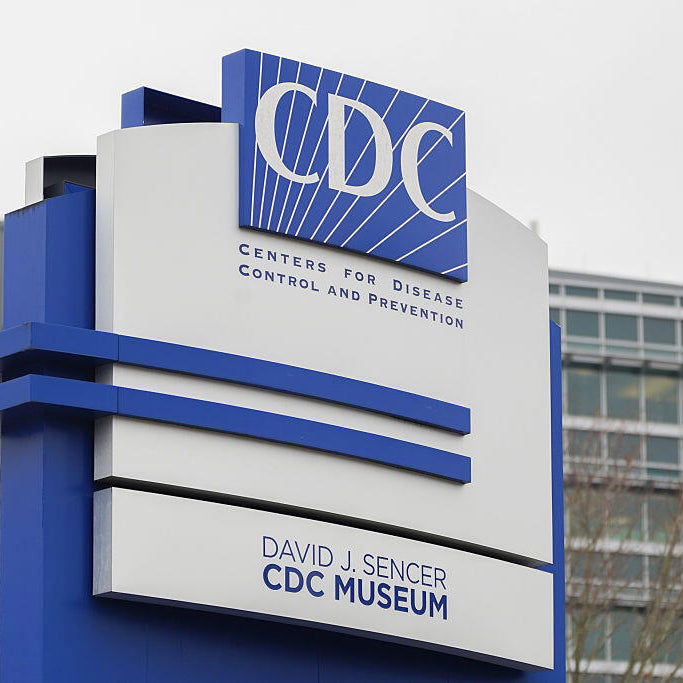
CDC Overhauls Childhood Vaccine Schedule
In a significant shift in American public health policy, the Centers for Disease Control and Prevention (CDC) has announced a major overhaul of the childhood vaccine schedule. The changes, implemented on January 5, 2026, follow a directive from President Trump and will result in fewer recommended vaccines for most American children, aligning the U.S. more closely with practices in other developed nations.

Key Changes to the Vaccine Schedule
Under the updated recommendations, the CDC has organized childhood immunizations into three distinct categories, all of which will remain covered by insurance without cost-sharing:
- Immunizations Recommended for All Children - This category includes vaccines for measles, mumps, rubella, polio, pertussis, tetanus, diphtheria, Haemophilus influenzae type B (Hib), pneumococcal disease, human papillomavirus (HPV), and varicella (chickenpox).
- Immunizations Recommended for Certain High-Risk Groups or Populations - Vaccines against respiratory syncytial virus (RSV), meningococcal disease, hepatitis B, and hepatitis A will now be recommended primarily for children who are at higher risk for infections.
- Immunizations Based on Shared Clinical Decision-Making - Vaccines for flu, COVID-19, and rotavirus will now be recommended based on consultation with healthcare providers rather than universal administration.
Background and Context
The overhaul comes one month after President Trump issued a Presidential Memorandum directing the Department of Health and Human Services to "FAST TRACK" a comprehensive evaluation of vaccine schedules from other countries and "better align the U.S. Vaccine Schedule" with international practices.
"President Trump directed us to examine how other developed nations protect their children and to take action if they are doing better," said HHS Secretary Robert F. Kennedy Jr. "After an exhaustive review of the evidence, we are aligning the U.S. childhood vaccine schedule with international consensus while strengthening transparency and informed consent."
The decision follows a comprehensive scientific assessment that compared U.S. childhood immunization recommendations with those of 20 peer developed nations. The assessment found that the U.S. was a global outlier in both the number of diseases addressed in its routine childhood vaccination schedule and the total number of recommended doses. In 2024, the U.S. recommended more childhood vaccines than any peer nation, and more than twice as many doses as some European nations.
International Comparison and Concerns
The new U.S. schedule more closely resembles that of Denmark, which immunizes children against 10 diseases compared to the 18 for which protection was provided in the U.S. schedule prior to these changes. However, experts caution that Denmark may not be an appropriate model for U.S. policy.
"They're 'two very different countries. Public health is not one size fits all,'" said Anders Hviid, who leads vaccine safety and effectiveness research at Denmark's Statens Serum Institut. "In Denmark, 'everyone has access to excellent prenatal and childhood care. As I understand it, that is not the case for everyone in the U.S. Vaccines prevent infections that may have poor outcomes for children who do not have access to good healthcare.'"

Expert Reactions and Potential Implications
The announcement has drawn mixed reactions from public health experts. While some support the move toward greater individualized decision-making, others warn of potential consequences.
"I think that a reduced schedule is going to endanger children and lay the groundwork for a resurgence in preventable disease," said Dr. Caitlin Rivers, an epidemiologist and director of the Center for Outbreak Response Innovation at the Johns Hopkins Bloomberg School of Public Health.
Despite these concerns, HHS officials emphasize that all vaccines currently recommended by the CDC will remain covered by insurance without cost-sharing. "No family will lose access," said Dr. Mehmet Oz, CMS Administrator. "This framework empowers parents and physicians to make individualized decisions based on risk, while maintaining strong protection against serious disease."
Looking Forward: Science and Trust
The accepted recommendations also acknowledge the need for more rigorous scientific evaluation of vaccines. HHS agencies have been called upon to fund gold-standard science, including placebo-controlled randomized trials and long-term observational studies, to better characterize vaccine benefits, risks, and outcomes.
"Public health works only when people trust it," said FDA Commissioner Dr. Marty Makary. "That trust depends on transparency, rigorous science, and respect for families. This decision recommits HHS to all three."
The HHS and CDC will now work with state health agencies, physician groups, and other partners on implementation and will educate parents and clinicians on the updated immunization schedules. This overhaul represents a significant shift in American vaccine policy that will likely be watched closely by public health officials worldwide.
Share this article
David Kim
Health and science reporter with a background in medicine. Passionate about making complex medical topics accessible.