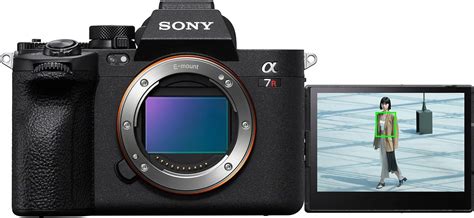
Sony a7 V: A Game Changer for Hybrid Shooters
Sony has dropped the Sony a7 V, the long-awaited successor to the wildly popular a7 IV, and it's not just an incremental update. Arriving amidst stiff competition from Canon and Nikon, the a7 V positions itself as a formidable contender for the best all-round full-frame mirrorless camera, leveraging a breakthrough in sensor technology and AI processing. It's a camera designed for photographers and videographers who demand speed, intelligence, and exceptional image quality in one package.
Core Innovations: Sensor, Processor, and AI
The heart of the Sony a7 V is its brand-new 33-megapixel partially stacked CMOS sensor. This is significant because, until now, Sony's partially stacked sensors were limited to 24MP, placing the a7 V in a unique performance bracket. Combined with a brand-new Bionz XR2 processor featuring an integrated AI processing unit, this sensor enables a leap forward in both stills and video capabilities.
Partially stacked sensors typically sacrifice some dynamic range for speed, but the a7 V bucks this trend. Sony claims an impressive 16 stops of dynamic range, an improvement over the a7 IV's 15 stops, translating to better shadow detail in high-contrast scenes. The faster readout speed is a game-changer, enabling blackout-free continuous shooting at a blistering 30 fps using the electronic shutter – a threefold increase over its predecessor. The mechanical shutter still offers a respectable 10 fps burst rate. 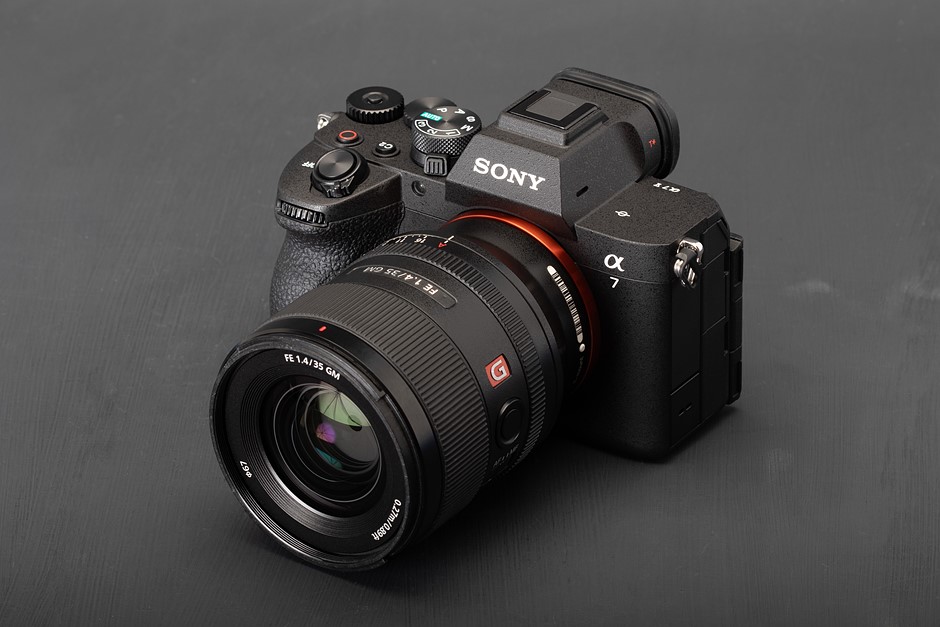
Smarter, Faster Autofocus
The integrated AI chip elevates the autofocus experience significantly. It powers what Sony calls its "fastest, most accurate subject-detect autofocus ever." The AI processing no longer handles just AF calculations but also significantly improves white balancing and exposure calculations in real-time, all at 60 times per second during bursts.
Subject recognition is vastly expanded. Beyond reliable Human, Animal, and Bird detection, the a7 V now includes:
- Human Pose Estimation: Tracks limbs and torsos, crucial for sports and action.
- Enhanced Animal/Bird Tracking: Selectable eye, head, or body tracking.
- New Categories: Recognition for Airplanes, Cars, Trains, and Insects.
- Auto Recognition: Automatically switches modes.
Performance is said to be reliable, even with obstacles between the camera and subject. Features like Precapture (recording frames *before* full shutter press) and a new "Continuous Shoot Speed Boost" help ensure you capture the decisive moment. Tracking accuracy is claimed down to EV -4.0 in low light.
Video Capabilities: Speed and Heat Management
Video shooters see major upgrades, though with some compromises. The a7 V introduces 4K 120p recording for the first time in the standard Alpha 7 line, though it requires an APS-C crop. More importantly, 4K 60p now uses the *entire* sensor width (effectively oversampling from 7K) without crop, provided the "Angle of View Priority" mode is enabled (which turns in-camera noise reduction off for best quality).
A key pain point addressed is thermal performance. Thanks to a new graphite heatsink, the a7 V can record continuously at 4K 60p for approximately 90 minutes at 25°C ambient temperature – a sixfold improvement over the a7 IV. At 40°C, it still manages around 60 minutes. This makes it far more practical for extended video shoots.
However, Sony made deliberate choices here. The camera does not offer resolutions beyond 4K (unlike Canon R6 III's 7K or Nikon Z6 III/Panasonic S1 II's 6K) and lacks internal or external RAW video recording, sticking to XAVC (H.265/H.264) formats. Sony argues this prioritizes manageable file sizes and workflow efficiency over the highest possible resolution, focusing on sharp, high-quality 4K 60p. Features like S-Cinetone color, LUT import, Auto-Framing (for tracking subjects), and improved livestreaming (4K 30p UVC/UAC) are included.
Build, Handling, and Connectivity
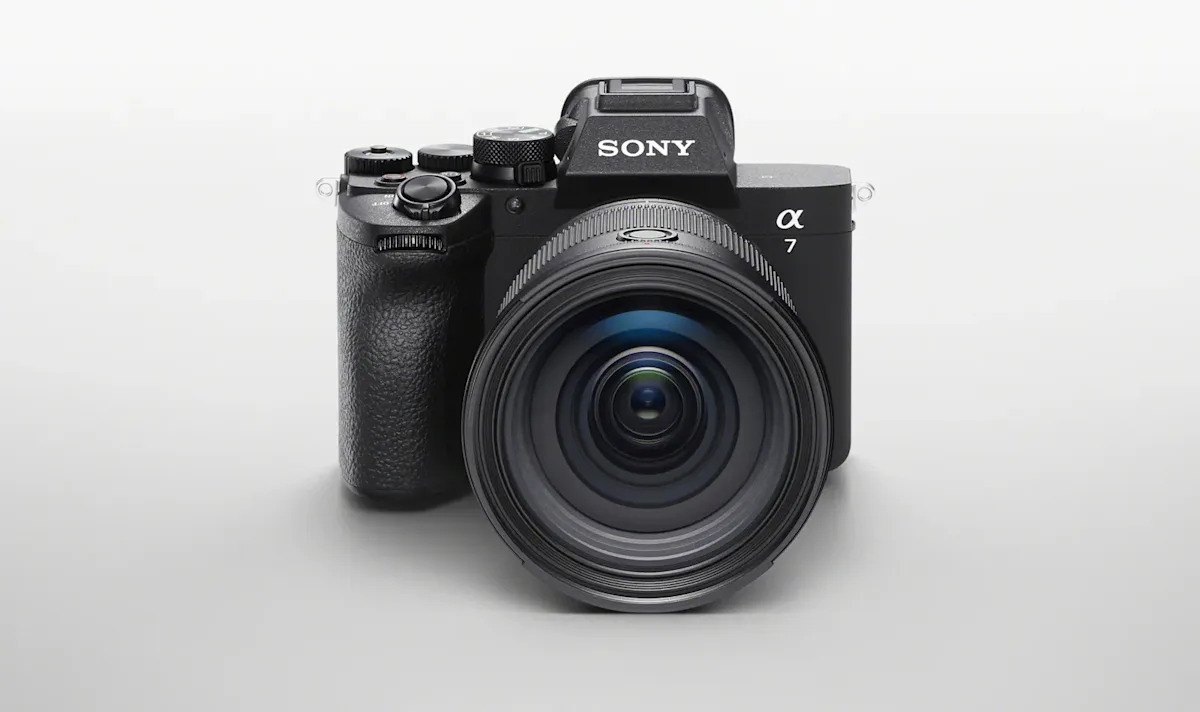
Physically, the a7 V is very familiar. It shares the same robust chassis, dials, and control scheme as the a7 IV – a positive, given its excellent ergonomics. It retains the hybrid CFexpress Type A / SD UHS-II card slots. The rear LCD is upgraded to a 3.2-inch 2.1-million-dot panel, borrowing the excellent fully articulating design from the a7R V, perfect for vlogging and low-angle shooting. The 3.69-million-dot EVF remains. Weight is around 695g (with battery/card), slightly heavier due to the new sensor.
Battery life sees a significant boost thanks to the more efficient Bionz XR2 processor, rated at 630 shots (CIPA, EVF) or 750 shots (LCD), up 21-29% from the a7 IV. Connectivity is a highlight, featuring:
- Dual USB-C Ports: One for high-speed data (USB 3.2 Gen2), one for power/low-speed signals.
- Wi-Fi 6 (6GHz): Faster wireless transfers for large files.
- 3.5mm Mic/Headphone Jacks & Full-sized HDMI.
IBIS provides up to 7.5 stops of stabilization at the sensor center.
Pros & Cons: The Bottom Line
Pros:
- Revolutionary 33MP partially stacked sensor: Speed + High Resolution + Excellent DR.
- Blazing fast, blackout-free 30fps electronic shutter bursts.
- AI-powered AF with vastly expanded subject recognition and tracking.
- Significantly improved thermal management for extended video recording.
- 4K 60p full-width readout (with Angle of View Priority).
- Greatly improved battery life.
- Excellent articulating LCD and familiar, functional controls.
- Dual USB-C ports and Wi-Fi 6 enhance workflow.
Cons:
- No video resolution beyond 4K (no 6K/7K).
- No internal or external RAW video recording.
- 10fps mechanical shutter lags behind some competitors.
- Retains single UHS-II SD slot alongside CFexpress Type A.
The Sony a7 V is a powerful evolution, delivering on speed and intelligence like never before in the Alpha 7 line. Its new sensor and AI chip make it incredibly fast and accurate for photographers, while vastly improved thermal management makes it a much more capable hybrid video camera. While it makes deliberate sacrifices in ultra-high-resolution video, its focus on delivering exceptional 4K 60p performance with reliable autofocus and manageable files is a strategic choice. For photographers seeking the ultimate burst speed and AI tracking, and videographers needing reliable 4K recording without overheating, the a7 V is a compelling, game-changing upgrade.
Share this article
Sarah Johnson
Technology journalist with over 10 years of experience covering AI, quantum computing, and emerging tech. Former editor at TechCrunch.